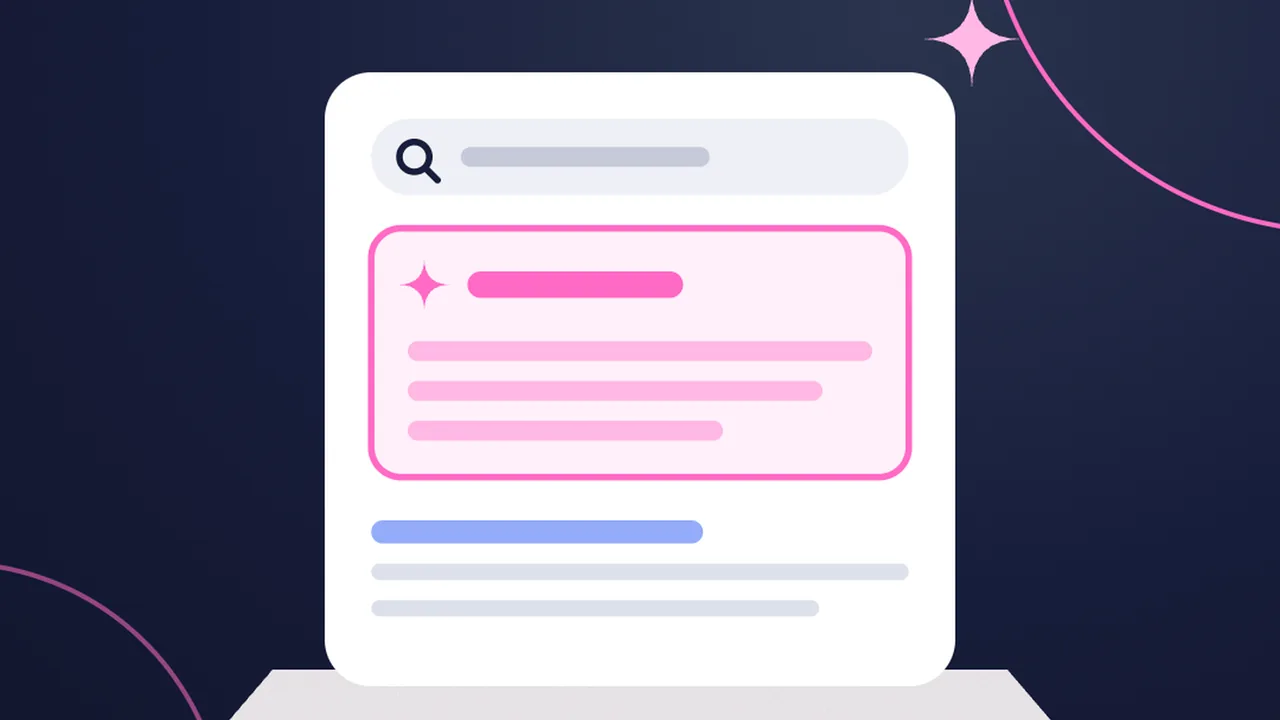
If you’ve searched Google recently and noticed a block of AI-generated text appearing at the very top of the results, before any website links, you’ve seen Google AI Overviews in action.
And if you’ve noticed that your website sometimes doesn’t appear in the results at all anymore, even for searches where you used to rank well, this is likely part of why.
Google AI Overviews are the most significant change to search results in twenty years. And most small businesses are completely unprepared for them.
What Google AI Overviews actually are
Google AI Overviews (previously called Search Generative Experience, or SGE) is Google’s way of using AI to synthesise an answer to a search query directly in the results page, before the user ever clicks a link.
Someone searches “best way to remove carpet stains.” Instead of ten links to articles, they get a concise AI-generated answer at the top of the page, summarising the key steps. Below it, a handful of sources are referenced. Most users read the overview and never scroll further.
For informational searches, this is already the norm. For local and commercial searches (“best accountant in Ballarat,” “where to buy timber flooring in Melbourne”) it’s increasingly common too.
The implication for small businesses is significant: you can rank on page one of Google and still be invisible if you’re not appearing in the AI Overview at the top.
Why some businesses appear and others don’t
Google doesn’t randomly choose which sources to pull into AI Overviews. It looks for content and businesses that demonstrate what it calls E-E-A-T: Experience, Expertise, Authoritativeness, and Trustworthiness.
In practice, this means:
Experience: Does your content reflect genuine, hands-on knowledge? First-person insights, real examples, specific details, and original perspective all signal experience. Generic “top ten tips” content that could have been written by anyone does not.
Expertise: Is there a clear subject matter expert behind the content? Named authors with credentials, founder bios, and industry-specific knowledge all help. Anonymous or unattributed content scores poorly.
Authoritativeness: Is your business recognised as a credible source within your industry or location? This includes backlinks from reputable sites, mentions in relevant publications, and a consistent presence in industry-specific directories.
Trustworthiness: Is your website secure, accurate, and consistent with how your business appears elsewhere online? Reviews, consistent NAP (name, address, phone) data, and transparent business information all contribute.
How to optimise specifically for AI Overviews
Write content that directly answers questions
AI Overviews are built to answer questions. The content most likely to appear in them answers specific questions clearly, concisely, and completely, ideally in a format Google can easily extract.
Think about the questions your customers actually ask before they hire someone like you. Write content that answers each one specifically. A paragraph that begins “The most common reason small businesses miss AI search results is…” is exactly the kind of content Google’s AI reaches for.
Use structured formatting
Headers, bullet points, numbered lists, and clear paragraph breaks all help Google’s AI parse and extract your content. A wall of unbroken text is hard to summarise. Well-structured content with clear H2s and H3s is easy.
Add FAQ sections to key pages
FAQ sections are one of the most effective formats for AI Overview inclusion. They mirror the question-and-answer structure Google is looking for. If your services page or homepage has a well-written FAQ section (paired with FAQ schema markup) you’re giving Google exactly what it needs to pull your content into an Overview.
Build your author and brand authority
If your blog posts and service pages are written by “Admin” or have no author attribution at all, fix that now. Named authors with linked bios, professional credentials, and consistent content history signal expertise to Google.
“Jo McAuliffe, founder of GoClearcut, 25 years in digital marketing” is a more credible source than an unnamed contributor. The same applies to your business.
Earn references beyond your own site
Google AI Overviews prioritise content from sources it considers authoritative. Getting referenced in industry publications, local business directories, and credible third-party websites builds the authority signals Google looks for.
This doesn’t mean you need a PR campaign. It means being listed in the right places, responding to review requests, and occasionally contributing a guest post or expert comment to a relevant publication.
The uncomfortable truth about AI Overviews
Here’s something I tell every client I work with on this: Google AI Overviews can reduce your organic traffic even when you’re doing everything right.
If Google is answering the question before the user clicks, fewer people visit your website, even if your content is the source being referenced. This is the reality of AI search, and it’s not going away.
The response isn’t to give up on organic search. It’s to optimise for being the source that gets cited in the Overview, and to ensure your website converts the traffic that does land there. It’s also why a diversified approach (Google Business Profile, local search, direct referrals, social media) matters more than ever.
Search has changed. The businesses that adapt will continue to grow. The ones waiting for it to go back to the way it was won’t.
Find out where you stand
The free AI Marketing Snapshot scores your business across five areas (your website and online presence, Google Business Profile, AI search visibility, content and social media, and email and lead nurture) and gives you a prioritised list of what to fix first. No payment step, no obligation.
If you want to go further, see how we approach SEO and AI search and how always-on marketing connects your website, search and marketing into one system.
AI assisted with research and editing. The views and recommendations are GoClearcut's own, and every article is reviewed by a person before it is published.